
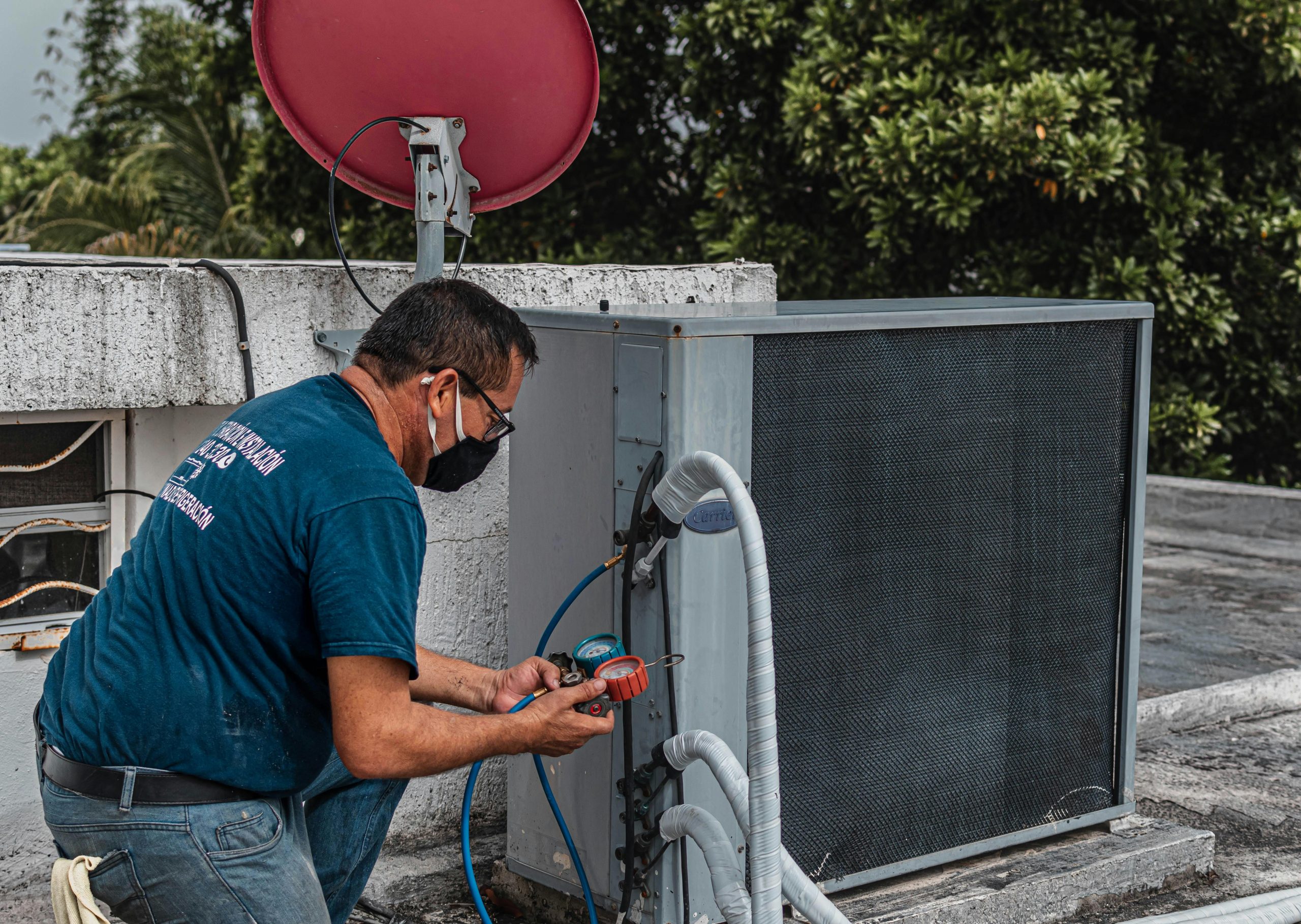
Let us tell you something most folks don’t hear enough: what happens inside those copper lines during installation can make or break your entire HVAC system.
1. Nitrogen Eliminates Oxygen to Stop Oxidation Before It Starts
When copper refrigerant lines are heated during brazing, oxygen inside the pipe reacts with the metal. That reaction creates oxidation—essentially internal contamination that you can’t see but will definitely feel later.
Example:
Think about sealing food in a vacuum bag. Without oxygen, bacteria and spoilage slow down dramatically. In HVAC terms, nitrogen creates that same “controlled environment,” but for metal instead of food.
Advice from Chad’s AC Direct:
2. Nitrogen Prevents Internal Scale Formation (Black Residue Buildup)
Without nitrogen, oxidation doesn’t just “happen”—it leaves behind a flaky, black residue inside the lines known as scale. This debris travels through your system and can clog critical pathways.
Nitrogen keeps the interior of the piping clean by preventing that residue from forming in the first place.
Example:
Imagine brewing coffee in a machine that hasn’t been cleaned in years. Every cup you make carries a little bit of that old buildup. That’s exactly what happens when scale forms inside refrigerant lines—it contaminates everything downstream.
Advice from Chad’s AC Direct:
3. Nitrogen Protects High-Value Components from Damage
HVAC systems rely on precision components like compressors, expansion valves, and metering devices. These parts are not designed to handle debris—even microscopic particles can cause wear or blockage.
Example:
Think of it like wearing clean gloves while handling delicate electronics. One small speck of dust can ruin a circuit board. Similarly, oxidation particles can compromise HVAC components that cost hundreds—or thousands—to replace.
Advice from Chad’s AC Direct:
Protecting your compressor starts on day one, not when it breaks. Ask your installer what steps they take to safeguard internal components during installation—not just after something goes wrong.
4. Nitrogen Maintains Proper Refrigerant Flow and System Balance
Your HVAC system depends on precise refrigerant flow to function efficiently. Any restriction—no matter how small—can throw off pressure levels, reduce cooling performance, and increase strain on the system.
Nitrogen prevents the formation of internal obstructions that would otherwise disrupt this balance.
Example:
Picture a highway during rush hour versus an open road. Even a minor blockage causes delays, backups, and inefficiency. Inside your HVAC system, oxidation acts like that traffic jam—slowing everything down.
Advice from Chad’s AC Direct:
Efficiency isn’t just about the unit you buy—it’s about how it’s installed. A properly installed system with clean lines will always outperform a high-end unit installed without attention to detail.
5. Nitrogen Extends the Overall Lifespan of Your HVAC System
At the end of the day, everything comes down to longevity. A system free of internal contamination operates under less stress, experiences fewer breakdowns, and maintains efficiency over time.
Example:
It’s like starting a marathon hydrated versus dehydrated. One runner maintains performance; the other struggles early and never fully recovers. Your HVAC system works the same way—its “start” determines its lifespan.
Advice from Chad’s AC Direct:
Conclusion
Here’s the truth most people don’t hear: HVAC problems don’t usually begin with dramatic failures—they start with small, preventable mistakes. Skipping nitrogen is one of them. And the frustrating part? By the time you notice something’s wrong, the damage is already done.
If you’re investing in comfort—especially in a place like Montgomery where your AC works overtime—make sure the invisible details are handled just as carefully as the visible ones. Because in HVAC, what you don’t see is often what costs you the most.
Ready for Service You Don’t Have to Second-Guess?
So if your AC is acting up… or you’re planning a new installation… or you just want someone to take a real look and do things the right way—
Call Chad’s AC Direct and set up your appointment today.
Frequently Asked Questions
1. Do HVAC technicians actually use nitrogen during installation, or is that an extra service?
Good question, because not everyone does it. Some techs skip nitrogen to save time, especially on tight schedules. The better contractors treat it as non-negotiable, not an add-on. If you’re unsure, just ask directly before booking. A confident “yes” usually means they take installation quality seriously.
2. Can I request nitrogen purging when getting a new AC installed?
Absolutely, and you should feel comfortable asking for it. A solid technician won’t hesitate or act surprised by that request. In fact, they’ll probably appreciate that you know what matters. It also sets the tone that you expect a clean, professional install. That alone can change how carefully the job is handled.
3. How do I know if my previous installer skipped nitrogen?
This one’s tricky because you can’t see inside the lines. But frequent issues like weak cooling or repeated part failures can hint at contamination. If your system struggles earlier than expected, it’s worth checking. A technician can inspect and give you a better idea. It’s not guesswork at that point.
4. Is nitrogen purging included in standard AC repair services?
5. Will using nitrogen make my HVAC system last longer?
Yes, but not in some magical overnight way. It prevents problems that slowly wear your system down over time. Clean lines mean less stress on internal parts. Less stress means fewer breakdowns. So yeah, it absolutely helps your system go the distance.
6. Does nitrogen purging affect how cold my AC feels?
7. Is nitrogen important for both residential and commercial HVAC systems?
Yes, across the board, no exceptions here. Whether it’s a home unit or a large commercial setup, the principle stays the same. Clean internal lines matter everywhere. Bigger systems just have more at stake if something goes wrong. So skipping nitrogen there is even riskier.
8. How long does nitrogen purging take during installation?
9. Can skipping nitrogen void my HVAC warranty?
10. Should I choose a contractor based on whether they use nitrogen?